
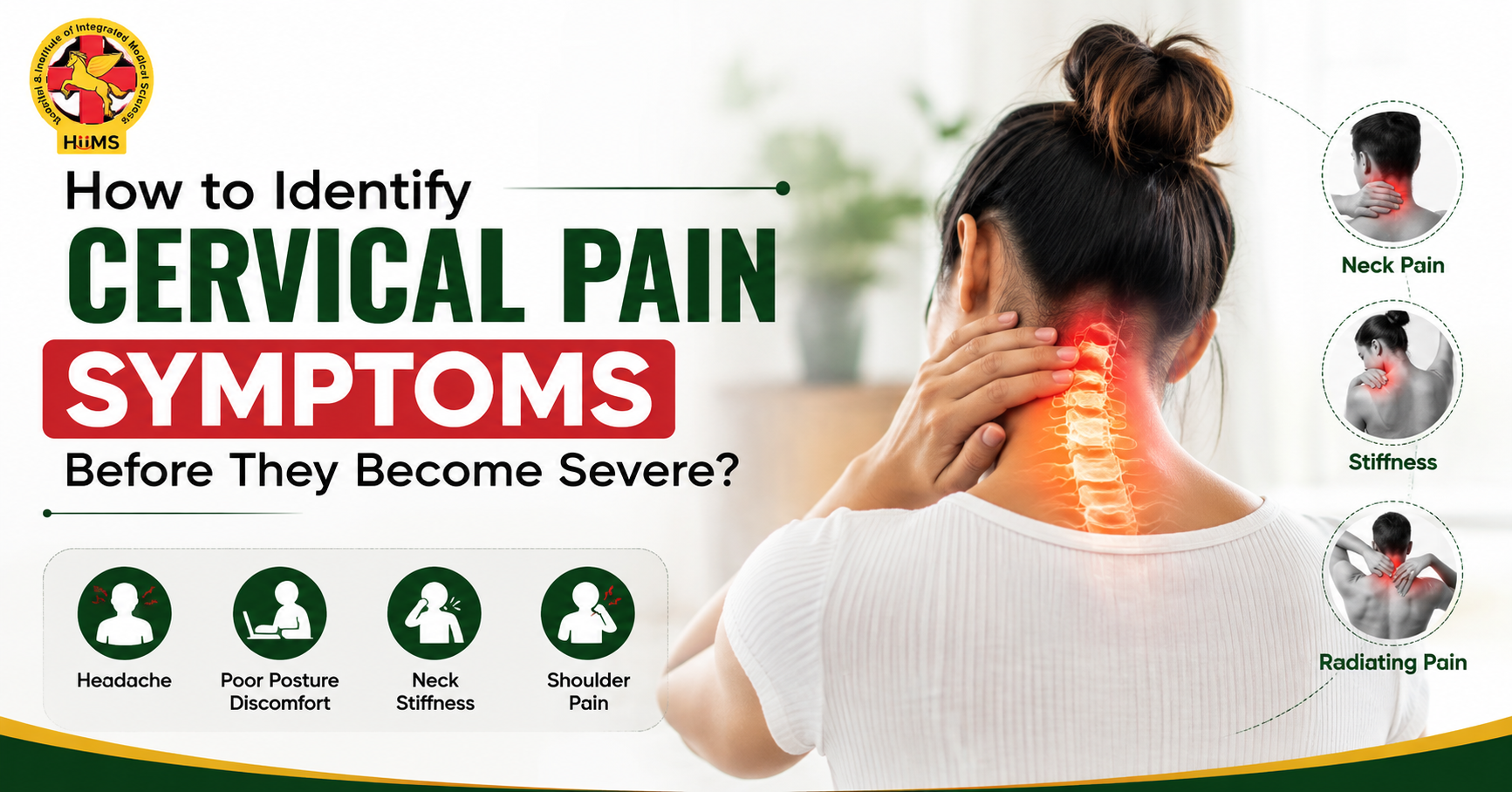
Neck pain is one of the most common health concerns affecting people of all ages. Long hours spent on computers, excessive mobile phone use, poor posture, stress, and an inactive lifestyle have significantly increased the number of people experiencing cervical pain. While mild discomfort may seem harmless at first, ignoring the early signs can lead to severe pain, reduced mobility, and difficulty performing daily activities.
Recognizing cervical pain symptoms at an early stage is important because timely care and healthy lifestyle changes may help prevent the condition from worsening. At Jeena Sikho HiiMS, the focus is on understanding the root cause of health concerns through natural healing principles, balanced nutrition, lifestyle modifications, and personalized wellness guidance.
What Is Cervical Pain?
Cervical pain refers to discomfort, stiffness, or pain in the neck region, particularly involving the cervical spine, which consists of seven vertebrae supporting the head. The neck is responsible for a wide range of movements, making it vulnerable to strain and stress.
Pain may develop gradually over time or appear suddenly due to muscle strain, poor posture, repetitive movements, or age-related changes. Identifying symptoms early can help reduce the risk of long-term discomfort.
Why Early Identification of Cervical Pain Matters?
Ignoring mild neck pain often allows the underlying problem to progress. As the condition worsens, simple activities such as turning the head, driving, working on a computer, or even sleeping comfortably may become difficult.
Early recognition helps you:
- Prevent worsening of symptoms
- Improve daily comfort and mobility
- Reduce muscle stiffness
- Maintain healthy posture
- Support long-term spinal wellness
Common Cervical Pain Symptoms You Should Never Ignore
1. Persistent Neck Pain
The earliest sign is often a dull or aching pain around the neck. Initially, the discomfort may appear after working for long hours or using electronic devices continuously.
If the pain continues for several days or keeps returning, it should not be ignored.
2. Neck Stiffness
Difficulty turning your head from one side to another is another common symptom. You may notice stiffness after waking up or after sitting in one position for a long time.
Reduced flexibility often indicates that the muscles and surrounding tissues are under stress.
3. Pain Radiating to the Shoulders
Cervical discomfort may not remain limited to the neck. Pain can gradually spread toward one or both shoulders.
This type of pain often becomes more noticeable during movement or prolonged sitting.
4. Frequent Headaches
Many people experience headaches due to tension in the neck muscles. These headaches often begin near the base of the skull and gradually move toward the forehead.
If headaches occur along with neck stiffness, cervical strain could be one of the possible reasons.
5. Muscle Tightness
A constant feeling of tightness in the neck and upper back is another early warning sign. The muscles may feel hard, tender, or sore when touched.
This tightness can limit daily movement and reduce overall comfort.
6. Reduced Range of Motion
If you find it difficult to look over your shoulder while driving or experience discomfort while looking up or down, your cervical spine may be affected.
Restricted movement is often an early indication that should not be overlooked.
7. Tingling or Numbness
In some cases, cervical discomfort may be accompanied by tingling sensations or numbness extending toward the arms, hands, or fingers.
These symptoms suggest that surrounding nerves may be under pressure and require timely attention.
8. Weakness in the Arms
Some individuals notice reduced strength while lifting objects or performing routine tasks.
Persistent weakness associated with neck pain should always be evaluated carefully.
Common Causes of Cervical Pain
Several everyday habits contribute to cervical discomfort.
1. Poor Posture
Sitting with rounded shoulders or bending the neck forward for extended periods places excessive pressure on the cervical spine.
2. Excessive Mobile Phone Use
Looking down at mobile devices for long durations increases strain on neck muscles.
3. Long Working Hours
Office professionals who spend hours at a desk without proper posture often develop cervical pain.
4. Stress
Mental stress frequently causes muscle tension around the neck and shoulders, contributing to discomfort.
5. Lack of Physical Activity
Weak muscles provide less support to the spine, increasing the likelihood of stiffness and pain.
6. Improper Sleeping Position
Using unsuitable pillows or sleeping in awkward positions may strain the neck muscles.
Who Is More Likely to Experience Cervical Pain?
Certain individuals have a higher risk of developing cervical discomfort, including:
- Office workers
- Students
- Drivers
- Mobile phone users
- Senior citizens
- Individuals with sedentary lifestyles
- People working long hours on computers
How to Prevent Cervical Pain from Becoming Severe?
Making small lifestyle improvements can help maintain neck health and reduce unnecessary strain.
1. Maintain Correct Posture
Keep your shoulders relaxed and your spine aligned while sitting or standing. Position computer screens at eye level to avoid bending the neck.
2. Take Frequent Breaks
Avoid sitting continuously for long periods. Stand, stretch, and move around every 30 to 60 minutes.
3. Perform Gentle Neck Exercises
Simple stretching exercises may help improve flexibility and reduce muscle stiffness. Always perform movements gently without forcing the neck.
4. Sleep Comfortably
Choose a pillow that supports the natural curve of your neck and maintain a comfortable sleeping posture.
5. Stay Physically Active
Regular walking, stretching, and moderate physical activity help maintain muscle strength and flexibility.
6. Manage Stress Naturally
Relaxation techniques, meditation, deep breathing, and maintaining a balanced daily routine may help reduce muscle tension caused by stress.
When Should You Seek Professional Guidance?
Do not ignore symptoms if they:
- Continue for several weeks.
- Become more intense over time.
- Limit your daily activities.
- Cause numbness or tingling in the arms.
- Reduce neck movement significantly.
- Are accompanied by noticeable weakness in the hands or arms.
Early guidance can help identify contributing factors before discomfort progresses further.
Natural Wellness Approach at Jeena Sikho HiiMS
At Jeena Sikho HiiMS, the emphasis is on supporting overall health through natural wellness practices. The approach focuses on understanding lifestyle habits, encouraging balanced nutrition, improving posture, promoting healthy daily routines, and providing personalized guidance based on individual needs.
The goal is to help individuals adopt sustainable habits that support spinal wellness, improve mobility, and encourage overall physical balance through holistic care.
Conclusion
Cervical pain often begins with mild symptoms that are easy to overlook, such as neck stiffness, occasional discomfort, muscle tightness, or headaches. However, ignoring these early warning signs may allow the condition to become more severe over time. Paying attention to your posture, staying physically active, taking regular breaks, and maintaining healthy daily habits can make a meaningful difference in supporting neck health.
If you frequently experience cervical pain symptoms, seeking timely guidance is a wise step toward protecting your long-term well-being. At Jeena Sikho HiiMS, the focus remains on promoting natural healing, healthy lifestyle practices, and holistic wellness to help individuals move toward a healthier and more balanced life.